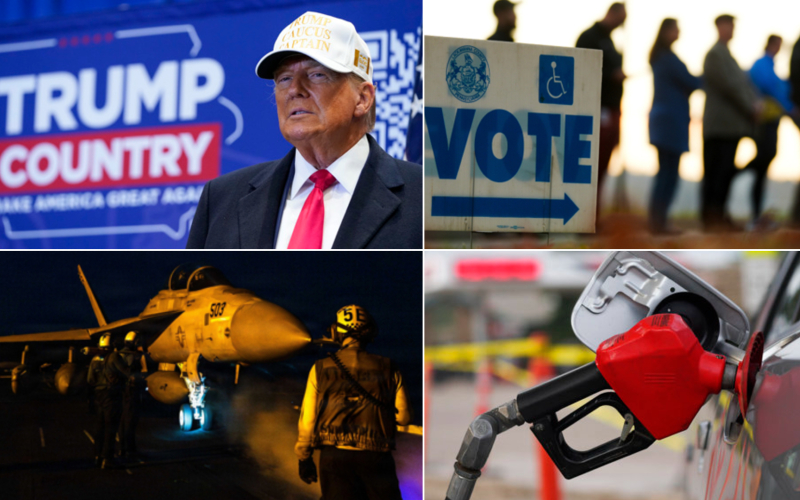
In a Fox News interview about the midterm elections, Southern Baptist Convention president Willy Rice said pastors “absolutely” should” be involved in the political process.
 “Because there are many political issues that are, at their heart, theological issues and moral issues,” he stated, “that strike at the very center of what we believe to be true, and what we believe people need to know to flourish personally and as a culture.”
Some issues that intersect with churches and Christianity, Rice said, are abortion and life; the biblical definition of marriage; gender and biology; and illegal immigration.
"These issues are deeply, profoundly theological issues,” Rice told Fox News.
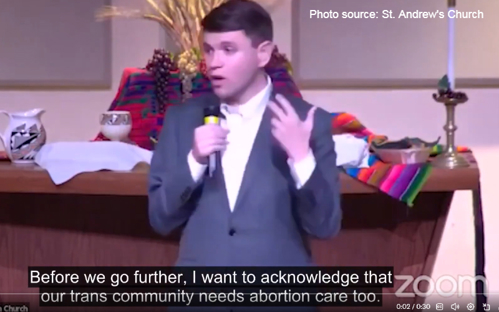 Rice’s comments are especially timely in Texas, where a U.S. Senate seat could be flipped by Democrat candidate James Talarico. A lifelong Presbyterian, he is unapologetically blending his liberal theology with radically far-left views on politics on the campaign trail.
Democrats running for office have traditionally been welcomed to preach politics in many liberal congregations, especially in majority-black churches, but politics and related cultural issues are rarely mentioned in many conservative-leaning congregations.
Churches fight Question 1 and Question 2
Reacting to Rice’s comments on American Family Radio, Liberty University spokesman Ryan Helfenbein shared two examples from his own state of Virginia that demonstrate the pastor’s plea for churches to get involved.
In November, the statewide ballot will have two proposed amendments — one for abortion, the second for same-sex marriage — that if successful would alter the state constitution in favor of both.
“Every church in the Commonwealth is being encouraged not just to vote but to vote no,” Helfenbein told AFR show host Jenna Ellis.
Helfenbein was referring to “Question 1” and “Question 2” on the statewide ballot that demand new constitutional protections for abortion and same-sex marriage respectively.

Question 1, the abortion amendment, asks voters if the Constitution of Virginia should be amended to “protect the freedom to make personal decisions” about abortion, and to protect “doctors, nurses, and patients” from “being punished” for those decisions.
Question 2, if approved, would recognize homosexual marriage in Virginia’s constitution and overturn a 2006 ban on homosexual marriage.
Even though many assume the issue is legally moot after the Obergefell ruling, Virginia’s liberal politicians believe otherwise.
 Alarmed after the right-leaning high court overturned their beloved Roe v Wade, fearful Democrats in Virginia introduced the proposed amendment as a legal — and moral — counterattack if the justice reverse course on their equally sacred Obergefell ruling and what they call “marriage equality.”
Meanwhile, the belief that two men and two women exchanging marriage vows is sinful is low-hanging theological fruit in most orthodox churches.
Voter turnout could decide radical amendments
In Virginia’s churches, Helfenbein said there is an “all hands on deck” effort to raise awareness about Question 1 and Question 2, and to get Bible-believing Christians to go vote and vote “no” on the proposed amendments.
The appeal to churches, and to church pastors to show leadership, is especially vital in purplish Virginia, where Election Day turnout can decide winners and losers by a few percentage points.
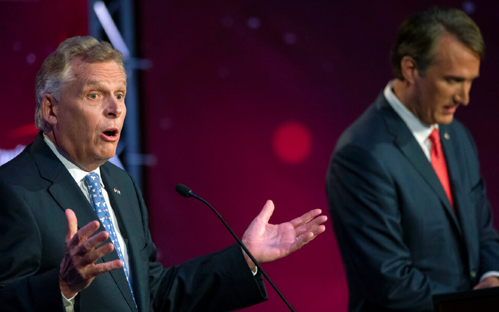 Glenn Youngkin, Virginia’s most recent Republican governor, narrowly defeated Democrat Terry McCauliffe 50%-48% in 2021. Only 63,600 votes separated the two candidates from 3.2 million that were cast.
The election of the current governor, Abigail Spanberger, is rolling back many of Youngkin's achievements after she campaigned as a moderate Democrat.
Ellis: Worldview influences everything
Helfenbein said Rice’s comments remind him of the SBC from 30-40 years ago, when its leaders such as Adrian Rogers were unafraid to use the pulpit to criticize the culture.
What stuck out to her in Rice’s comments, Ellis shared, is when he pointed out the Left has no hesitation in mixing religion and politics. It is only conservative Christians, she said, who are told to keep their personal faith away from politics.
 "Everybody else mixes their worldview into politics, including even people who profess to be the secular humanist atheist," Ellis said. "They still have a view of the world, and they still have a view of right and wrong."
Asked about Rice's comments, veteran pollster Mark Mitchell told AFN his research shows many so-called Christians don't hold a Christian worldview.
"If you take a worldview proxy, like how you vote or support the candidates based on an issue like abortion, there's a huge difference between the different denominations," he advised.
Echoing Ellis's comment about worldview, Mitchell said polling shows atheists have the strongest opinion on abortion over any religious group.
"The next-strongest worldview was in Evangelicals," he advised.