
Former President Joe Biden’s Afghan refugee screening process was blasted in 2022 by a devastating report by the Department of Homeland Security (DHS) Inspector General (IG) for lacking such basic information as a list of individuals who lacked “sufficient identification documents” and warned as a result of individuals being admitted into the country “who pose a risk to national security and to the safety of local communities.”
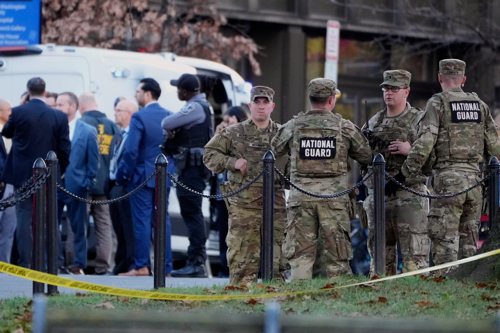
The report provides important context for officials and members of Congress as they assess and respond to the November 26 terrorist attack on the streets of the capital that killed one West Virginia National Guardsman and critically injured a second one.
The attacker, it was quickly determined in the aftermath, was a 29-year Afghan refugee admitted into the U.S. in the wake of the American military withdrawal from Afghanistan in 2021. That refugee is one of more than 79,000 Afghans brought into this country under Biden.
Between August 2021 and July 2022, the DHS Operation Allies Welcome (OAW) program brought more than 79,000 Afghans from that war-torn country that was taken over by the Islamic terrorists known as the Taliban. Of the total, almost 29,000 of the Afghans brought into the United States by the Biden administration program were males, including many of military service ages.
The IG report found two crucial flaws in the OAW screening and vetting process, flaws that DHS officials roundly denied existed in their response to the watchdog’s analyses.
First, the U.S. Customs and Border Patrol (CBP) officials involved in the screening and vetting “did not always have critical data to properly screen, vet, or inspect Afghan evacuees. … We determined some of the information used to vet evacuees through U.S. Government databases, such as name, Date of Birth (DOB), identification number, and travel document data, was inaccurate, incomplete, or missing.”
As a result, the report said, “CBP also admitted or paroled evacuees who were not fully vetted into the United States.”
The precise number of such individuals could not be determined with the available information, according to the IG report, but evidence was overwhelming that “DHS paroled at least two individuals into the United States who posed a risk to national security and the safety local communities and may have admitted or parole more individuals of concern.”
The identities of the two particular individuals were not included in the report.
A major obstacle to U.S. efforts to properly screen and vet Afghans, the report stated, was the fact “it is customary in Afghanistan for some individuals to have only one name. It is not always part of the Afghan culture to record or know exact DOBs. In Afghanistan, even though national legislation requires registration of children at birth, years of conflict decimated the administrative mechanisms and the social institutions supporting them.”
Consequently, whenever an Afghan told CBP officials they did not know their DOB, the official entry was January 1 of the estimated year of birth. “For example, if an evacuee stated he/she was 20 years old, the DOB most likely assigned was January 1, 2001,” the report explained.
 The IG’s investigators reported they found 417 records with no known first name, 242 records with no last name, 7,800 records had invalid or missing document numbers, and 11,110 records with the January 1 DOB.
The investigators also reported encountering 36,400 records based on what was described as a “facilitation document.” But CBP officials were unable to “define or provide an explanation for this document type Travel Document Data,” and 36,400 records had “facilitation document” as the document type. However, during the audit, CBP could not define or provide an explanation for this document type, indicating potential inaccuracies.”
A second major flaw in the screening and vetting process was the fact “DHS did not have formal screening and vetting policies to support OAW” at the outset of the program, as the U.S. military withdrawal was launched.
“Instead, during the initial months of OAW, DHS officials said screening and vetting requirements were decided on an ad hoc basis. DHS and CBP did not have standardized formal policy documents and instead could only provide informal flowcharts, meeting minutes, and draft documents,” the report said.
The final conclusion of the IG’s investigators was that “the safety and the security of the American people is the highest priority for the U.S. Government. Preventing criminals, suspected terrorists, or other nefarious actors from entering the United States requires thorough screening and vetting. CBP’s use of incomplete or inaccurate data would not have yielded positive matches from intelligence databases if the individuals had derogatory records under a different name or DOB. Therefore, DHS and CBP cannot be sure they properly screened, vetted, and inspected all evacuees.”
The DHS response to the 2022 report was to reject it entirely, including the IG recommendation that all questionable individuals be re-screened and vetted.
“DHS responded that it was proud of its OAW efforts and highlighted multiple agencies involved in the screening and vetting of the Afghan evacuees. The OIG acknowledges the interagency efforts supporting this unprecedented event to screen and vet all evacuees. However, DHS’s response does not address the concerns of this audit and the recommendations which are aimed at reviewing the execution of OAW’s efforts and improving future, similar OAW efforts,” the IG concluded.
On Feb. 13, 2024, then-DHS Secretary Alejandro Mayorkas was impeached by the U.S. House of Representatives for “high crimes and misdemeanors” in his administration of U.S. immigration policies. Mayorkas thus became the first presidential cabinet member to be impeached by the House. The impeachment was not upheld by the Senate.
The 2022 IG assessment was first reported in the aftermath of the attack on the guardsman by veteran conservative investigative journalist Richard Pollock on Substack.
Editor's Note: This article first appeared here.
Notice: This column is printed with permission. Opinion pieces published by AFN.net are the sole responsibility of the article's author(s), or of the person(s) or organization(s) quoted therein, and do not necessarily represent those of the staff or management of, or advertisers who support the American Family News Network, AFN.net, our parent organization or its other affiliates.