


When Trump took the podium at the UN General Assembly Tuesday, he knew many in the crowd despised him. In fact, most of Iran's delegation walked out of the chamber when the president railed against the Islamic Republic, but he did not pull any punches.
"The terrorist regime is behaving badly, not because they are strong and confident, but because they are weak and desperate," Trump said. "If we stand united, we will soon see a world free of the last 51-year menace of Iranian terror."
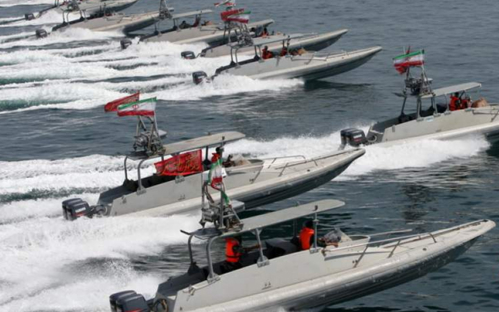 Since the 1979 Islamic Revolution, the Iranian regime has used state-sponsored terrorism as a core pillar of its foreign policy. It has operated primarily through the Islamic Revolutionary Guard Corps, the IRGC, and its elite external wing known asn the Quds Force.
Designated by Western nations as a terrorist organization, the regime finances, arms and directs a highly integrated proxy network known as the "Axis of Resistance" to destabilize the Middle East, assault global trade and attack Western and Israeli targets.
Beyond its regional proxy wars, Tehran actively engages in transnational repression by deploying criminal syndicates for global assassination plots against dissidents and foreign officials, utilizes "hostage diplomacy" through the arbitrary arrest of dual-nationals for political extortion and launches state-sponsored cyberattacks against critical Western infrastructure.

"Could there be a more mismatched pair than the American president that actually thinks his country should be the first priority he has and the great majority of the people sitting in that audience at the UN that at the end of the day are globalists?" poses Gary Bauer, chairman of the Campaign for Working Families.
"They're not interested in America, or anybody else, unless they can guilt us into giving them massive amounts of our taxpayers' money," he added.
When President Trump launched Operation Epic Fury alongside Israel in February 2026, he predicted the war would last just four to five weeks.
Now, nearly seven months later, the conflict has reached a high-stakes diplomatic crossroads. Following a collapse of a mid-summer ceasefire agreement, both sides resumed exchanging drone and missile strikes, causing severe disruption to global shipping through the Strait of Hormuz and driving oil prices past $100 a barrel.
Public and political viewpoints surrounding the ongoing war reflect a sharp, highly polarized divide inside the United States and across the international community. Driven by rising energy costs linked to the ongoing war in Iran, the issue has significantly altered U.S. voter intent.
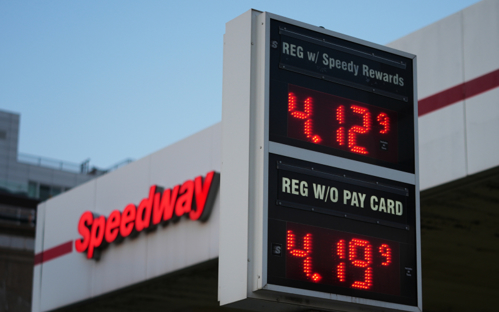 Some voters are telling pollsters high gas prices are a small price to pay for national security, but the latest national polling ahead of the 2026 midterm elections shows 40% of registered voters say the Democratic Party would do a better job handling gas prices. That number is compared to 27% who favor the Republican Party.
Bauer believes many UN members want a Democrat elected president of the United States in 2028.
"I can guarantee you that the Iranians would not walk out of the speech that that president gave at the United Nations," he tells AFN. "The Iranians, and every other dictatorship or extremist Islamist ideology government in the world, would be quite happy and pleased to see Kamala Harris or AOC (Alexandria Ocasio-Cortez), or any of these other possible contenders be president of the United States, again."
"The only people that would end up being very unhappy doing all that would be the American people when they realized they had made a gigantic mistake," Bauer asserts.


