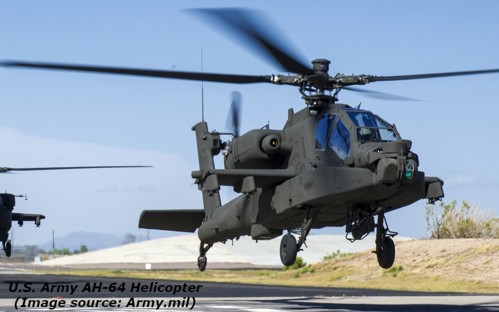
Trump was urging restraint from Iran and Israel until an Iranian drone attack forced a crash landing of a U.S. Army Apache helicopter.
Afterward the president said Iran must pay. He resumed strikes Wednesday then promised more — including an attack of Iran’s coveted Kharg Island — for Thursday night.
“The president's rhetoric changed talking about the price Iran may need to pay. Just a couple of days ago, he was urging restraint from both Israel and Iran. And then with his constant ability to surprise, he's taken a different tack just a couple of days later. So, we've got to watch as things develop,” Dr. David Adesnik, vice president of research for Foundation for Defense of Democracies, said on “Washington Watch” Wednesday.
Develop they have.
Early Thursday afternoon EST — approximately five hours after threatening Kharg Island — Trump said he was canceling the strikes planned for Thursday night local time in Iran.
One of the obstacles in Trump’s efforts to negotiate has been who is actually in charge for the Islamic regime, whether the Iranian Revolutionary Guard Corp (IRGC) or its religious government.
 Thursday, Trump seemed clear the party with which he’s been speaking has decision-making authority.
“Based on the fact that discussions with the Islamic Republic of Iran have been brought to the highest level of Iranian leadership and approved, I have, as President of the United States of America, cancelled the scheduled strikes and bombings against Iran this evening,” he wrote on Truth Social.
Once again, the president implied an end to war soon.
“Discussions and final points have been, in both concept and great detail, approved by all parties involved, including the United States, Israel, Saudi Arabia, UAE, Qatar, Turkey, Pakistan, Bahrain, Kuwait, Jordan, Egypt, and others. The Naval Blockade will remain in full force and effect until this Transaction is finalized — Time and place of the signing to be announced shortly,” he wrote.
Before Thursday, one development had been increasingly bold attacks from Iran against the U.S. and multiple other countries, John “Fozzie” Miller, a former commander of U.S. Naval Forces CENTCOM and a fellow with the Jewish Institute for National Security for America, also appearing on “Washington Watch,” told show host Tony Perkins.
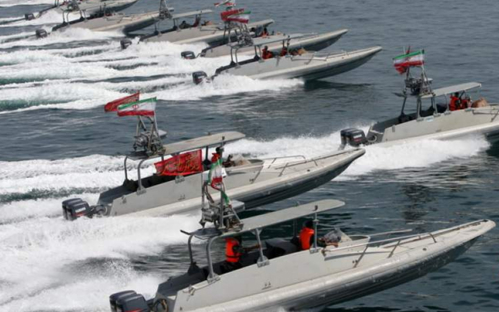
In recent days Iran has attacked not only the U.S. helicopter, but also Bahrain, Kuwait, Jordan and Israel.
The Wall Street Journal on Tuesday reported that Iranian officials said the U.S. helicopter was not attacked intentionally.
They also didn’t say it was accidental on their behalf. It’s possible the helicopter could have collided with the Iranian drone through its own doing.
 “Foreign forces in proximity to our territory are at constant risk on account of their own human errors, plain accidents or potentially being caught in crossfire. To reduce risk, best solution is for them to leave,” Iran Foreign Minister Abbas Araghchi wrote on X.
He followed that statement with another Iranian threat.
“We prefer language of diplomacy but speak other languages too.”
Trump’s alternating tone is twofold, Miller said.
“I think this was the president's way of indicating that we're not satisfied with that kind of activity on the part of the regime, and if they want to have serious negotiations, then they need to honor the ceasefire. Also, I think in attacks that he has promised in some of his messaging there is an understanding that the Iranians really aren't negotiating in good faith.”
Trump threatens Kharg Island
Trump early Thursday promised U.S. attacks against Iran after dark and noted action against Kharg Island coming soon.
Kharg Island handles roughly 90% of Iran's crude oil exports, making it the country's most important oil terminal. Oil from Iran's major fields is piped to the island, loaded onto supertankers, and shipped primarily to Asian customers, especially China.
Iran relies heavily on oil revenue. If Kharg Island were shut down, blockaded, occupied, or its export facilities damaged, Tehran would lose a large share of its foreign-currency income. Analysts have described it as Iran's "oil lifeline."
 The island has been a frequent point of media speculation about U.S. plans during the war.
“The United States will be hitting Iran (Whose Navy, Air Force, Radar, Anti Aircraft, and all other forms of Defense, together with most of its offensive capability, are GONE!), VERY HARD TONIGHT. At some point in the not too distant future, we will be taking Kharg Island, and other oil infrastructure points, and assume total control of their Oil and Gas Markets, much like we have with Venezuela, which is working out brilliantly for both Venezuela and the United States of America,” Trump wrote on Truth Social.
In 2025, the Trump administration tightened restrictions, revoking Chevron's broad operating license and ordering a wind-down of many activities.
Then, following the U.S. raid and ouster of former Venezuelan leader Nicolás Maduro in January, Washington reversed course and broadly reopened the sector to Western energy companies. The Treasury Department authorized companies including Chevron, BP, Shell, Eni, and Repsol to operate oil and gas projects in Venezuela.
Qatari officials have continued shuttle diplomacy between Tehran and other regional capitals as fighting and retaliatory strikes have intensified.

Iran had not yet accepted key U.S. demands, particularly regarding enriched uranium stockpiles and long-term nuclear restrictions, according to media reports.
Qatari diplomats have carried proposals and counterproposals between Tehran and Washington while trying to prevent the current military confrontation from spiraling into a broader regional war. Negotiations had remained alive but fragile, with both diplomacy and military pressure occurring simultaneously.
“I think the Qataris would like an agreement. They would like things to settle down. But they are a country that happens to play both sides quite a bit, nominally a U.S. ally, but, of course, also the country that hosted leaders from Hamas,” Adesnik said.
What’s next?
The U.S. and Israel began strikes against Iran on Feb. 28. The strikes took out key leadership and degraded Iran’s nuclear program, missile capabilities and other military infrastructure.
After several weeks of fighting, a conditional ceasefire began on April 8.
The U.S. has watched as Iran has begun to dig itself out of the rubble and rebuild.
Should Trump’s latest enthusiastic response to talks with Iran turn south, Miller believes easing pressure in the Strait of Hormuz will drive U.S. decisions in the days ahead.
“I think we have a very good idea of where they are and what capabilities they have,” he said. “I think what you'll see in the strikes that follow are strikes that are aimed at reducing their capability, in particular, their ability to keep and impede traffic from going through the Strait of Hormuz.”