Cuba's antiquated power grid, which was already iffy at best for most of the island’s non-wealthy citizens, came crashing down Monday after Cuba hasn’t received oil shipments in three months.
One reason the oil stopped flowing is a U.S. energy blockade, initiated in late January by President Trump. That executive order followed the U.S. capture of Venezuelan leader Nicolas Maduro weeks earlier, which immediately disrupted critical oil shipments to Cuba that were the main source of electrical power for the island nation.
“There are food shortages,” Robert Maginnis, a national security expert, told AFN. “They have a failing health care system and, of course, understandably unrest amongst the population.”
Those basic problems, such as going hungry and sitting in the dark, Maginnis summarized, point to a “systematic failure” of Cuba’s communist government.
It now appears Cuba’s systematic failure was planned, or at least allowed, by the Trump administration. Secretary of State Marco Rubio has been leading a U.S. effort to change the island’s freedom-crushing communist leadership during Trump’s second term.
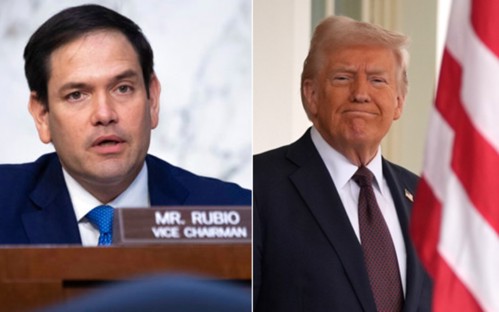 Axios, the news website, was the first news outlet to report in a Feb. 18 exclusive that Rubio had been holding secret talks with Raúl Guillermo Rodríguez Castro. He is the grand-nephew of Fidel Castro and grandson of Raul Castro, who is Fidel’s younger brother and successor.
A former U.S. senator, Rubio, 54, has publicly called for a democratic Cuba for years after his parents immigrated to the U.S. from Cuba in the 1950s.
The younger Castro, 41, is described in news outlets as a member of the “inner circle” of the Castro family. That means he enjoys immense wealth, and wields dangerous political power, in the Communist Party-run nation.
In the Axios story, an unnamed Trump administration official said Rubio and Castro were having “discussions” rather than “negotiations” about Cuba’s future.
One person not mentioned in those talks is Miguel Díaz-Canel, Cuba’s president, who is not considered to be part of the nation’s powerful political circle.
Humberto Fontova, who fled Cuba in 1961, has been interviewed by AFN for many years about Cuba and its brutal communist regime.
Asked about the Rubio-Castro talks, he agreed that President Diaz-Canel doesn’t wield any real political power and is more a figurehead and even a “puppet” of the Castro family.
“So the consensus among the exile community seems to be that if they remain, it's not going to be satisfactory,” Fontova says of the Castro family.
Comparing the political situation in Cuba to Venezuela, where thuggish Communists also crushed basic freedoms, Fontova points out the Trump administration is now working with Delcy Rodriguez, Maduro’s vice president.
“They haven't found somebody with that frame of mind in Cuba yet,” Fontova cautions.
Maginnis told AFN the Trump administration should apply "steady pressure" to the Castro regime in exchange for concrete steps, such as freeing political prisoners, expanding freedom, and opening the economy, while providing aid to the Cuban people.
"This is both a strategic and moral imperative," he said, "but it must produce lasting change, not instability."