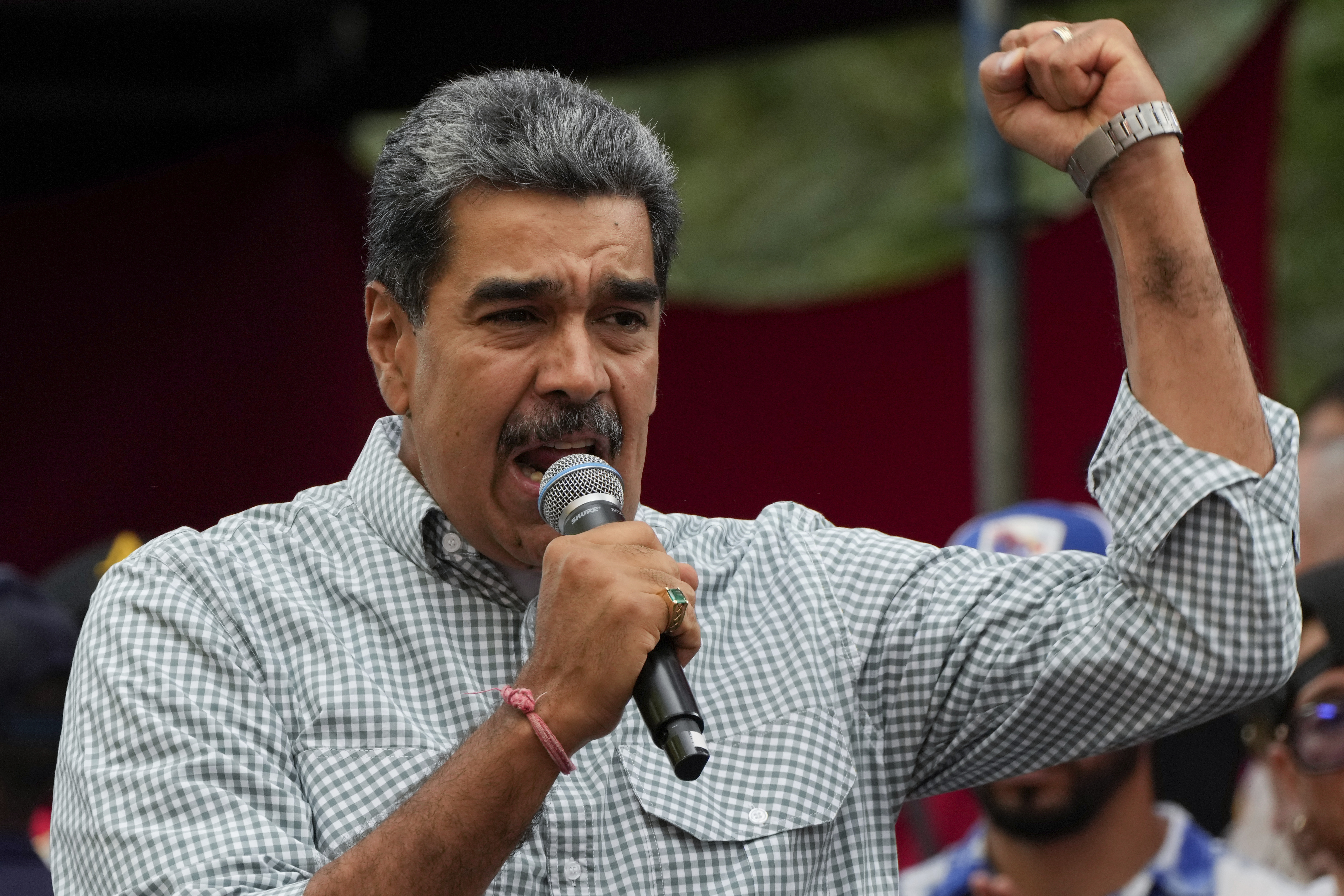
The U.S. has escalated pressure on Venezuela’s government, accusing its President Nicolás Maduro of running a narcotics-trafficking cartel and of undermining democracy and human rights.
Since the summer, the U.S. has carried out a series of military and naval operations targeting vessels it says are involved in drug trafficking off the Caribbean coast and near Venezuela. The U.S. has deployed warships — including an aircraft carrier — to the region, citing efforts to combat narcotics.
 Diplomatically and publicly, the U.S. has taken a hardline stance: it does not treat Maduro as a legitimate leader, and has reportedly considered a range of options, military and non-military, to pressure regime change or force Maduro’s removal.
Trump has announced air space around Venezuela closed. How he enforces that remains to be seen.
Maduro recently told a rally in Caracas that it was their historic duty to fight foreign aggressors just as Venezuelan liberation hero Simón Bolívar did two centuries ago.
“Look, President Trump did not run as the candidate who will bring you regime change, but I think what he ran was the president that will bring you a secure homeland,” Rear Admiral (retired) Mark Montgomery said on Washington Watch Monday.
Fentanyl the greater drug threat to the U.S.
Part of the security means taking on the international drug trade.
Trump has been focused on fentanyl, Montgomery told show host Jody Hice, but the problem is multi-layered.
Initially, he's going to take care of this cocaine problem, and that requires more than knocking off suspected drug boats one at a time.
“The cocaine comes from Venezuela and Colombia. We've been shooting ships coming out of Venezuela and coming out of Colombia, a total of 21 now, and destroying them. But that's like shooting arrows instead of shooting the quiver,” Montgomery said.
Venezuela’s drug-production facilities and storage facilities are the quiver.
 “I imagine they are heavily targeted right now by the United States in preparation for an attack over the next few days,” he said. “I think we'll conduct strikes against the production and storage of cocaine. We'll also strike their military assets that could impact us, their aircraft and air defense systems, and their airfields.”
What the Trump administration would really like is for Maduro to “get on a plane to Turkey or Cuba or Russia,” Montgomery said.
While many of the chemicals used to make fentanyl are manufactured in China, Mexican transnational criminal organizations (TCOs) — especially Sinaloa Cartel and Cártel Jalisco Nueva Generación (CJNG) — process those chemicals into fentanyl in clandestine labs in Mexico, then traffic the finished product into the U.S. across the southern border.
“Look, we'd like to get fentanyl first, and honestly, fentanyl is the much bigger deal, but what he can easily get at is cocaine. He disliked Maduro in his first term, and I don't think his opinion on Maduro has changed at all,” Montgomery said.
The Venezuela election mess
Maduro remains in power in spite of hotly contested election results from the summer of 2024.
Results from the government-dominated National Election Council showed Maduro with 51.2% of the vote.
But opponents and many international observers allege that the 2024 election was marred by serious irregularities, lack of transparency, and electoral manipulation.
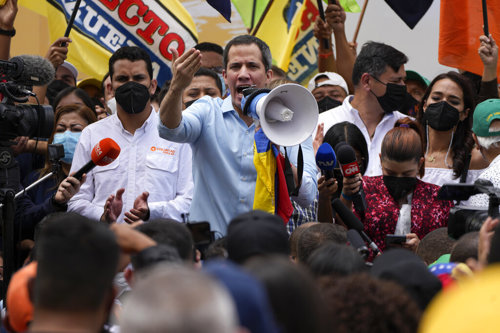 According to opposition-compiled precinct-level tally sheets reportedly collected by the opposition after the vote, Maduro’s opponent, Edmundo Gonzalez Urrutia actually received a large majority, far exceeding the official margin. Some analyses of those tallies claim he got roughly 66-70% of the vote to Maduro’s 30–31%.
Even if Maduro were to leave, there are no guarantees about the U.S. relationship with the next government.
“He is going to leave, and eventually the democratically elected government will get in there, but it gets messy, and I think the president would prefer not to be involved in that part of regime change.”