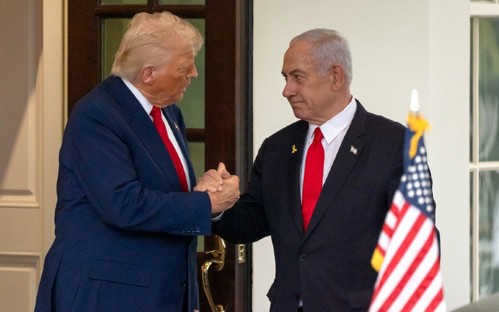
President Donald Trump dispatched two envoys to Israel on Monday to attempt to shore up the tenuous ceasefire in Israel, reports the AP. On Sunday, Israel's military said terrorists had fired at troops in areas of Rafah city, which are Israeli-controlled according to agreed-upon ceasefire lines.
 Hamas claims that their unties in Rafah have been isolated and that they are not responsible for their actions. Meanwhile, they are pointing the finger at Israel for multiple ceasefire violations.
Retaliatory strikes by Israel killed 45 people in Gaza, and a total of 80 people have been killed since the ceasefire took effect on October 11. Israel has since said that it will resume the ceasefire and aid deliveries.
The next stage of the ceasefire will focus on disarming Hamas and withdrawing Israel from Gaza.
Bob Maginnis is a military strategist and author of more than a dozen books on national defense.

"Trump is nice. He called it Hamas factions that are quite rambunctious, but Hamas is not all that well-centrally controlled. So, you're going to have these radicalized people that are going to go off their ‘so-called’ reservation and do these acts of violence, which we've seen over the last week," states Maginnis.
Maginnis says that Israel responded accordingly.
"Netanyahu unleashed his people to do what's necessary. But at the same time, he wants to keep the ceasefire in place as much as they can,” explains Maginnis. “Of course, the Egyptians are doing their piece with round-the-clock talks to deescalate the situation. No surprises: things are proceeding. It's going to be bumpy, but we predicted that."
Maginnis comments that Hamas is not going to go away easily or quickly, so this process is going to take a good long time.