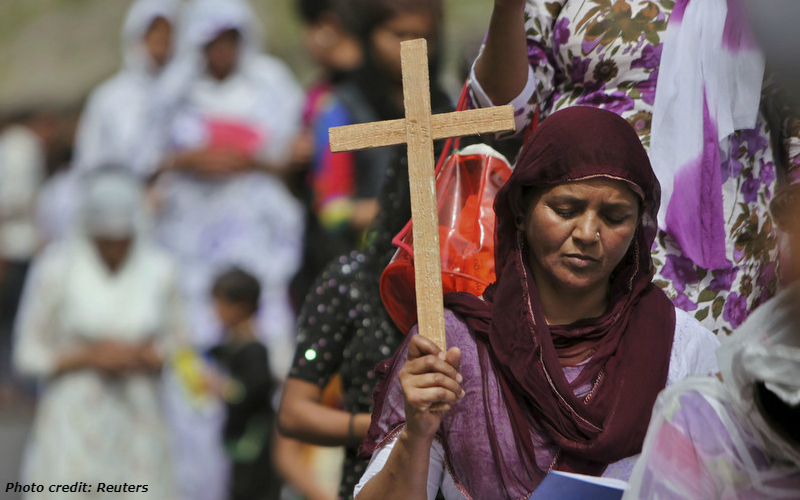
But the word is an accurate description of persecution faced by Christians in Nigeria, the president of a global Christian advocacy group said on “Washington Watch” Wednesday.
President Donald Trump began using the phrase “Christian Genocide” to describe anti-Christian Islamic violence in Nigeria.
Numerous advocacy organizations — including Open Doors, Global Christian Relief, and International Christian Concern (ICC) — had documented attacks on Christian communities for many years.
Open Doors reports that 3,490 Nigerian Christians were killed alone in 2025.

Hundreds more abductions and attacks on homes and property have forced thousands to relocate, Shawn Wright, president of International Christian Concern, told show host Jody Hice.
“There were whole villages that were that were removed. The Christians were attacked. They were run out, and they're put in government camps now,” Wright said.
Wright said Trump’s use of “genocide” in describing the situation is not flippant.
“If it isn't we're very close, and I personally kind of lean that way,” he said.
On Christmas Day, Trump announced that he had authorized U.S. military strikes against Islamic State-affiliated militants in northwestern Nigeria. He explicitly linked the operation to his repeated warnings about attacks on Christians. He added that he had previously warned the militants of severe repercussions if they continued attacks against Christians.
The Christmas strikes represented a significant escalation in U.S. involvement against jihadist groups in Nigeria, but they did not end the violence. U.S. officials indicated additional military action could be considered if needed, and counterterrorism cooperation between Washington and Abuja has continued.
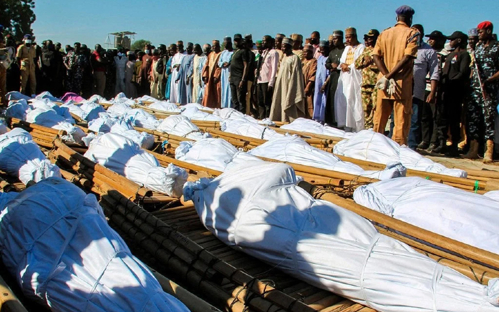 There have been no additional U.S. strikes in Nigeria. In fact, the Islamic militants regained their confidence and violence overall has not diminished, Wright said.
“So far this year we know at least 2,500 Christians have been killed in Nigeria. The attacks are increasingly larger. They're increasingly moving on whole villages, and people are being killed indiscriminately. The Christians are specifically being attacked.”
For a time, violence was contained mostly to the northern part of Nigeria, but it has spread.
“It is no longer a northern problem in Nigeria. It is fully, I would say, a three-quarters of the country problem,” Wright said.
In late June, Open Doors reported that at least 20 people were killed in one attack on a predominantly Christian farming community in Nigeria’s Middle Belt region.
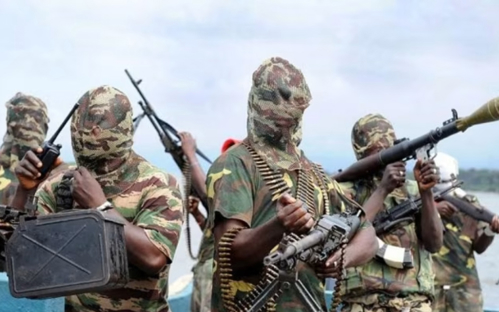 Among the dead were a church leader and a pregnant woman.
Open Doors cited two locals from the scene who said the attack happened around 2 a.m., but police did not respond until after daylight.
Security forces are not that far away, but their “late arrival left the defenseless community entirely at the mercy of their assailants for the duration of the raid,” Bishop Ayuba Matawal, a church leader, told Open Doors.
Earlier in June, the United Nations wrote to the Nigerian government expressing concerns over “deeply troubling” violence against Christian women and girls that has included abductions, forced marriages and killings.
Camps no safe haven
Such crimes continue after Christians have been placed in camps.
“These crimes took place within a broader pattern of violence and persecution disproportionately affecting Christian communities in some northern states, including killings, attacks on churches and villages, mass displacement, mob violence linked to accusations of blasphemy, and severe insecurity affecting women and children in internally displaced persons camps,” a U.N. press release stated.
“At this point we can say that persecution in Nigeria is the greatest persecution of our day by far, and it’s the fastest growing. That’s why it’s so alarming,” Wright said.
Wright and an ICC team visited Nigeria two months ago, observing Christians in a camp and providing food, biblical resources and other needs.
“What these people are going through, it’s a trauma that most people cannot even fathom,” he said.