


They won’t continue to work if the Washington, D.C., federal circuit court has its way, and this court may be in the right, attorney Gerard Filittie said on American Family Radio Tuesday.
The court last Friday ruled 7-4 that President Trump exceeded his authority under the International Emergency Economic Powers Act (IEEPA) when he imposed what he called “reciprocal” and “trafficking” tariffs on many U.S. trading partners.
The question seems to be what constitutes an emergency.
The court stayed its ruling through Oct. 15, meaning the tariffs remain in place for another month and a half to give the administration time to formulate its appeal.
 The case is headed to the U.S. Supreme Court, many legal analysts believe.
But the High Court is unlikely to bail out Trump on this matter, Filitti told show host Jenna Ellis.
The circuit court considered a number of arguments “the emphasis being that this legislation, the International Emergency Economic Powers Act, is meant for emergencies, and a longstanding trade deficit, a trade imbalance, does not constitute an emergency,” Filitti said.
The circuit court highlighted the major questions doctrine, a principle in which courts do not simply defer to an agency or the administration for their interpretation of a statute.
Instead, the court requires clear congressional action for the issue in play to move ahead.
Congress has a role in this
Major questions doctrine is rooted in concern for separation of powers.
“Basically, tariffs are within the province of Congress, and the courts have systematically and consistently held that Donald Trump exceeded his authorities with these tariffs. This is problematic, and it's not likely to be resolved by the Supreme Court in the near future,” Filitti said.
Critics lined up when Trump began unveiling his tariffs strategy in April. Many trading partners have responded with reciprocal tariffs, China, Russia, European Union, Canada and Mexico to name a few.
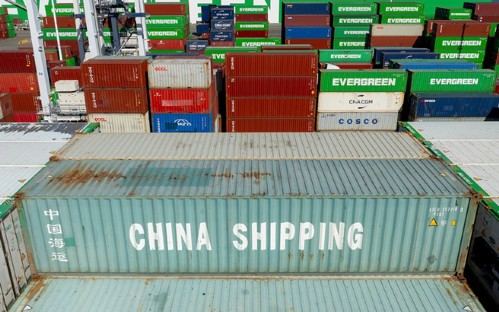 Trump extended tariff rates on some countries in July, and the situation remains fluid.
“Tariffs don’t work. If anything, they hurt the economy because … you have to spend more on the necessity products that you need to live, you have less to spend on the services that you want to buy. And you definitely don’t have anything left over to save,” said Gary Cohn, former director of the National Economic Council.
Most recent figures place total tariff collections at $142 billion.

Treasury Secretary Scott Bessent recently suggested that annual tariff revenue could reach more than $500 billion and possibly climb toward $1 trillion, Reuters reported.
“The reason I don’t think the Supreme Court will actually side with the Trump administration here is that we need to look at what the emergency powers actually are, what constitutes an emergency. President Trump can make a very valid case that the fentanyl crisis is an emergency, and that imposing tariffs to address that might very well be viable and appropriate. That does not necessarily mean, however, that you can use the fentanyl crisis to impose tariffs on Europe or on Africa, which is not a source or part of the problem,” Filitti said.
The administration must do a better job of matching existing law with individual countries with which it seeks better trade deals.
Finding the law to match the goal
Certain language within the Trade Expansion Act and the Trade Act address tariffs and might be more compatible with White House goals, Filitti said.
The Trade Expansion Act of 1962 was signed into law by President John F. Kennedy, who described it as the most important economic legislation since the Marshall Plan. The Act aimed to promote U.S. economic growth, strengthen international economic relations, and prevent Communist economic influence by lowering trade barriers.
A key provision is Section 232 which allows the President to impose tariffs or other import restrictions if the U.S. Secretary of Commerce determines that certain imports threaten national security.
The Trade Act of 1974 restructured U.S. trade policy and established the Office of the United States Trade Representative. Section 301 authorizes the U.S. trade representative to investigate and respond to foreign trade practices that violate agreements or harm U.S. commerce
“It's just a matter of procedure, and I think that Trump does have plenty of laws that he can rely on to maintain tariff structures," Filitti said. "But he just needs to be more specific into which authority he's using for which tariff."


