A new report from Heterodox Academy reveals the difference in faculty hiring between 2024 and 2025. The study compared hiring cycles in the fall: 10,000 faculty job advertisements in 2024 and 16,500 advertisements in 2025.
The results showed a sharp decline in DEI requirements among faculty hiring. Standalone DEI statement requirements dropped from 13.4% to 2.5%, and explicit requests to address DEI in full-time applications dropped from 25% to 11%.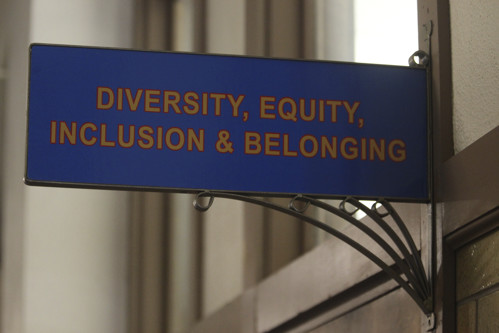
Peter Wood, president of the National Association of Scholars and author of “Diversity: The Invention of a Concept,” spoke with Jody Hice on “Washington Watch.”
Woods doesn’t believe much is changing with DEI.
“I think America's faculty have been burned by the executive orders issued by the Trump administration that oftentimes threaten cutoffs of their grants and other funding, and therefore they know that they've gone too far with DEI, and they need to back out,” Wood states.
According to the Department of Education, over 300 institutions of higher learning “eliminated DEI requirements, closed DEI offices, removed diversity statements from hiring practices, and altered or removed DEI policies.”
While Wood’s organization and others have been skeptical of DEI, others have tied their careers to advancing it.
The poll data is positive, but he thinks the tide could change and DEI will be promoted once again.

“I'm happy to see that the poll results are showing that it's on the decline, but I think that may depend well on the national politics, and if the politics were to change, we would probably be right back in the soup with DEI as we've known it in the past,” Wood states.
In states that have taken legislative action to eliminate DEI, Wood says that's going to stick. However, blue states are not eager, he says, to retire the DEI regime, despite the administration’s efforts to remove racial preferences from higher education.
Those anti-DEI bills are hugely popular with students and the public, they’re not as popular on academic campuses as it is viewed as an infringement of academic freedom, says Wood.
He reveals that some institutions have found a workaround.
“All across the country, we've seen hundreds of colleges and universities retire their DEI offices simply by changing the plaque on the door. They're now called things like ‘offices of belonging,’ but it's the same personnel and the same agenda,” says Wood.
A survey from the College Fix in June 2025 showed that 87 colleges chose to rename their DEI offices instead of shutting them down.
For example, CNN reported last year that Harvard changed the name of its DEI office to Community and Campus Life as they tried to restore federal funding taken away by the Trump administration.
“There's a complicated game going on. We are seeing a public distaste for DEI, but higher education is a little enclave in American society where DEI is still viewed as a wonderful thing by those in power,” Wood states.
He believes it’s accurate to say that the decline of DEI in some institution is just a temporary trend while it may be more permanent in others.
“Some universities see the future in being inclusive in the sense of allowing conservatives to have a voice, to be not simply the mouthpiece of a radical regime. But others embrace that radical regime and are desperately hoping for its restoration,” says Wood. “They think it's coming, and if they just hold on long enough, they'll be getting their game back.”